
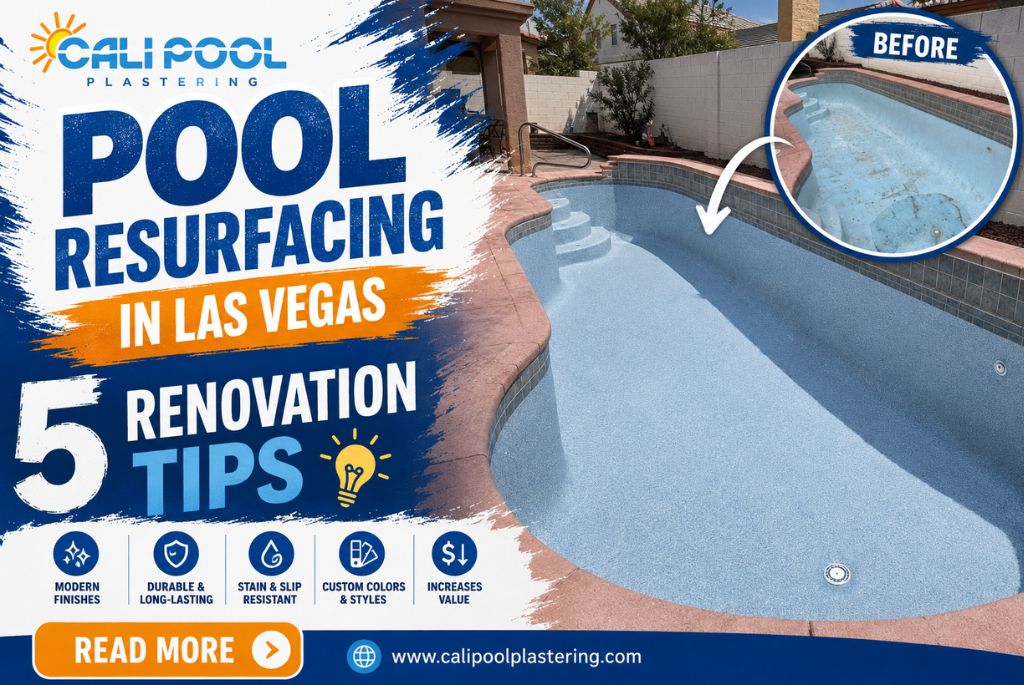
A swimming pool is one of the most valuable features of a Las Vegas home, but the desert climate can be tough on pool surfaces. Constant sun exposure, high temperatures, hard water, calcium buildup, and daily chemical use can slowly wear down plaster, pebble finishes, tile lines, and pool surfaces over time.
At first, the damage may look small. You may notice rough areas near the steps, stains that do not brush away, small cracks, fading color, or spots where the surface feels sharp under your feet. But if these issues are ignored, they can lead to bigger problems such as water loss, surface breakdown, leaks, or expensive structural repairs.
That is why pool resurfacing in Las Vegas is not just about making your pool look better. It is about protecting the structure, improving swimmer safety, extending the life of the pool, and keeping your backyard looking clean and inviting. Before starting a pool renovation, homeowners should understand the signs of surface damage, finish options, cost factors, preparation work, and maintenance needs. These five tips will help you make a smarter decision before investing in pool resurfacing.
Why Pool Resurfacing Matters for Las Vegas Homes
Las Vegas pools deal with conditions that many other cities do not. Intense UV rays can fade pool finishes faster. Hard water can leave calcium deposits around the tile line and surface. Dust, wind, heat, and chemical imbalance can also speed up wear and tear.
A damaged pool surface can create several issues:
- Rough texture that can scratch feet and skin
- Stains that make the pool look dirty
- Cracks that may become larger over time
- Plaster peeling or flaking
- Water loss caused by surface damage or leaks
- Difficulty keeping pool chemicals balanced
- Lower curb appeal and property value
Many homeowners wait until the pool looks very bad before calling a contractor. That usually makes the project more expensive. Early resurfacing or timely plaster repair can often prevent deeper damage and keep the pool safer for everyday use.
Tip 1: Know the Signs Your Pool Needs Resurfacing
The first step is understanding when your pool surface is no longer in good condition. Some warning signs are easy to spot, while others develop slowly.
Common signs your pool may need resurfacing include:
- Rough or sharp pool plaster
- Visible cracks or chips
- Stains that do not go away after cleaning
- Fading or discoloration
- Peeling, flaking, or hollow spots
- Water level dropping faster than normal
- Calcium buildup on the surface
- Difficulty maintaining water chemistry
- Uneven or worn areas around steps and benches
If the pool surface feels rough, it may mean the plaster is breaking down. This can make swimming uncomfortable and may also indicate the surface is becoming porous. A porous surface absorbs water and chemicals more easily, which can lead to staining and deeper deterioration.
Small cracks may not always mean your pool needs full resurfacing, but they should never be ignored. A professional inspection can help determine whether simple swimming pool plaster repair is enough or whether a full resurfacing project is the better long-term solution.
For Las Vegas homeowners, surface damage can worsen quickly because of heat, evaporation, and mineral-heavy water. If your pool already looks worn before peak summer, it is better to schedule an inspection early instead of waiting until the damage spreads.
Tip 2: Choose the Right Pool Finish for Your Home
Choosing the right finish is one of the most important parts of any pool renovation. The finish affects how your pool looks, how long it lasts, how much maintenance it needs, and how much you will spend over time.
There are several common pool resurfacing options, but plaster, quartz, and pebble finishes are among the most popular.
Plaster Pool Finish
Plaster is a traditional pool finish that gives a smooth and clean appearance. It is usually one of the more affordable options, which makes it attractive for homeowners who want a simple refresh.
Benefits of plaster:
- Lower upfront cost
- Smooth surface feel
- Classic pool appearance
- Good for basic resurfacing projects
- Faster installation compared to some premium finishes
Things to consider:
- More likely to stain over time
- Can become rough if chemicals are not balanced
- Shorter lifespan than pebble or quartz
- May require more maintenance in hard water areas
A plaster pool finish can be a good choice for homeowners who want an affordable update, but in a hot desert climate, it must be maintained carefully.
Quartz Pool Finish
Quartz finishes combine plaster with quartz aggregate. This creates a stronger surface than standard plaster and gives the pool a more decorative appearance.
Benefits of quartz:
- More durable than basic plaster
- Better stain resistance
- Attractive color options
- Smoother than some pebble finishes
- Longer lifespan with proper care
Quartz is a strong middle-ground option for homeowners who want better durability without going all the way to a premium pebble finish.
Pebble Pool Finish
Pebble finishes are made with small natural stones mixed into the pool surface. They are known for durability, texture, and a high-end look.
Benefits of pebble finishes:
- Excellent durability
- Strong resistance to UV exposure
- Natural, premium appearance
- Better long-term performance
- Good choice for Las Vegas climate conditions
Pebble finishes often cost more upfront, but they can last longer and handle outdoor conditions better than basic plaster. For homeowners comparing Pebble Tec vs plaster pool finish, the decision usually comes down to budget, appearance, texture preference, and long-term durability.
If you want a lower upfront price, plaster may work. If you want a longer-lasting finish with stronger resistance to heat and sunlight, a pebble finish may be a better investment.
Tip 3: Understand the Real Cost to Resurface a Pool
Many homeowners start with one question: how much does pool resurfacing cost?
The answer depends on several factors. There is no one fixed price because every pool is different. Pool size, shape, surface condition, finish type, prep work, and extra repairs can all affect the final estimate.
Main factors that affect pool resurfacing cost:
- Size of the pool
- Depth and shape
- Existing surface condition
- Amount of cracking or damage
- Finish material selected
- Tile replacement needs
- Plumbing or leak issues
- Surface preparation requirements
- Labor and project complexity
- Add-ons such as lights, coping, or decking
A simple plaster resurfacing project will usually cost less than a premium pebble or quartz finish. However, the cheapest option is not always the best value. If a low-cost finish wears down quickly or requires frequent repairs, it may cost more over time.
Finish options and general cost expectations:
- Plaster is usually the most budget-friendly option
- Quartz is typically mid-range
- Pebble finishes usually cost more but last longer
- Paint or coating may be cheaper but usually has a shorter lifespan
For most residential pools, homeowners should expect resurfacing to be a meaningful investment. A complete Pool Renovation Service may cost more if it includes tile, coping, lighting, decking, waterline repairs, or equipment updates. The best approach is to request an on-site estimate. A contractor can inspect your pool surface, check for cracks, review prep needs, and recommend the most practical finish for your budget.
Tip 4: Do Not Skip Proper Pool Surface Preparation
Surface preparation is one of the most important parts of pool resurfacing, but many homeowners overlook it. A beautiful finish will not last if the surface underneath is not prepared correctly.
In Las Vegas, proper prep is especially important because of hard water, calcium deposits, heat expansion, and old plaster breakdown. If the old surface is weak, dirty, cracked, or poorly bonded, the new finish may not attach properly.
Professional pool surface preparation may include:
- Draining the pool
- Removing loose or damaged plaster
- Pressure washing
- Grinding rough areas
- Repairing cracks
- Removing calcium buildup
- Acid washing when needed
- Applying a bond coat
- Preparing the surface for the new finish
This stage can determine how long the resurfacing project lasts. If the contractor rushes preparation, the new finish may peel, bubble, crack, or fail earlier than expected.
Why acid washing may be needed
- Acid washing is often used to remove stubborn stains, mineral deposits, algae marks, or surface residue. It helps clean the pool shell before resurfacing or before certain repair work.
- Acid washing should be done carefully by experienced professionals because improper use can damage the pool surface. When done correctly, it can improve bonding and help create a cleaner base for the new finish.
- If you are hiring a contractor, ask exactly what surface preparation is included. Do not only compare prices. A cheaper estimate may leave out important prep steps, and that can lead to more expensive problems later.
Tip 5: Ask the Right Questions Before Hiring a Contractor
Choosing the right contractor is just as important as choosing the right finish. A professional pool resurfacing contractor should explain the process clearly, inspect your pool properly, and help you choose a finish based on your home, budget, and long-term goals.
Before hiring anyone, ask questions that help you understand their experience and process.
Important questions to ask:
- What finish do you recommend for my pool and why?
- Is plaster repair enough, or do I need full resurfacing?
- What surface preparation is included?
- Will you repair cracks before applying the new finish?
- How long will the project take?
- What warranty is included?
- How soon can the pool be refilled?
- What maintenance is required after resurfacing?
- Do you handle tile, coping, or other renovation work?
- What can cause the new finish to fail early?
A good contractor should not pressure you into the most expensive option. They should explain the pros and cons of each finish and help you understand what your pool actually needs.
Also, ask for details about the startup process after resurfacing. New plaster, quartz, or pebble finishes need proper water chemistry after filling. Poor startup care can affect the appearance and lifespan of the new surface.
Pool Resurfacing Process: What Homeowners Should Expect
Understanding the process can help you plan better and avoid surprises.
1. Pool Inspection
The contractor checks the surface condition, cracks, stains, tile line, water loss signs, and overall pool structure.
2. Pool Draining
The pool is drained so the surface can be accessed safely.
3. Surface Removal and Prep
Old, damaged, or loose material is removed. The pool shell is cleaned, repaired, and prepared for the new finish.
4. Crack and Damage Repair
Cracks, chips, hollow spots, and weak areas are addressed before the new finish is applied.
5. New Finish Application
The selected finish is applied by professionals. This may be plaster, quartz, pebble, or another suitable material.
6. Refilling the Pool
Once the surface is ready, the pool is refilled.
7. Startup and Chemical Balancing
Water chemistry is balanced carefully to protect the new finish. Brushing and maintenance are usually required during the first few weeks.
Most pool resurfacing projects take several days, depending on pool size, surface condition, weather, and the type of finish selected.
How to Make Your New Pool Surface Last Longer
After resurfacing, proper maintenance is essential. Even the best finish can wear out early if the pool is not cared for correctly.
Follow these maintenance tips:
- Keep water chemistry balanced
- Brush the pool regularly after resurfacing
- Clean calcium buildup early
- Maintain proper water level
- Avoid harsh chemical misuse
- Do not let stains sit too long
- Schedule regular pool inspections
- Keep the filtration system working properly
- Follow contractor instructions after resurfacing
Las Vegas homeowners should pay close attention to calcium and mineral buildup because hard water can affect the pool surface and tile line. Regular maintenance helps protect your investment and keeps the pool looking clean.
Final Thoughts
Pool resurfacing in Las Vegas is one of the best ways to restore your pool’s appearance, improve safety, and protect the structure from long-term damage. Whether your pool has rough plaster, cracks, stains, fading, or signs of water loss, addressing the issue early can save money and prevent bigger repairs.
Before you renovate, take time to understand your finish options, compare plaster vs pebble, ask about surface preparation, review cost factors, and choose a contractor who explains the process clearly. The right resurfacing work can make your pool more beautiful, more comfortable, and more durable for years. For homeowners planning a pool renovation, Cali pool Plastering can help with professional resurfacing guidance, finish options, and pool surface preparation suited for Las Vegas conditions.
FAQs
Most pools need resurfacing every 7 to 20 years, depending on the finish, water chemistry, climate, and maintenance quality. Plaster may need resurfacing sooner, while pebble and quartz finishes can last longer.
Pebble and quartz finishes are often strong choices for Las Vegas because they can handle sun exposure, hard water, and outdoor conditions better than basic plaster. However, plaster can still be a good option for homeowners with a smaller budget.
Most pool resurfacing projects take several days. The timeline depends on pool size, surface damage, preparation needs, finish type, weather, and curing requirements.
Surface preparation helps the new finish bond properly to the pool shell. Without proper prep, the new surface may peel, crack, bubble, or fail early.
Pebble finishes are usually more durable and longer-lasting than plaster, but they cost more upfront. Plaster is smoother and more affordable, but it may require more maintenance and resurfacing sooner.
Yes, a clean and well-maintained pool can improve backyard appearance and support property value. A worn, stained, or rough pool surface can make the pool look neglected, while a fresh surface can make the outdoor space more appealing.