
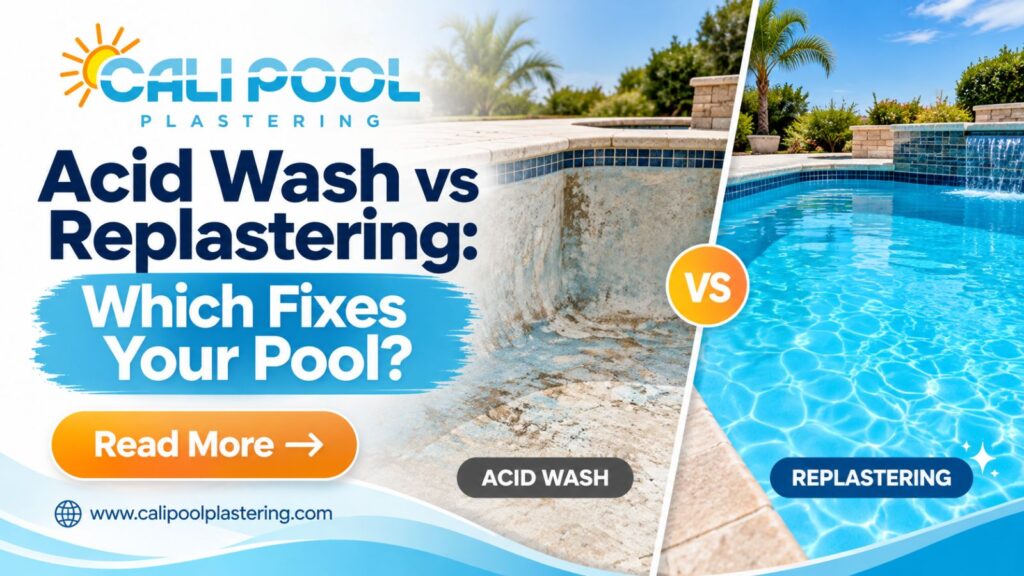
The decision between an acid wash vs. replastering comes down to whether the problem is on the surface or in the surface. Acid washing is an aggressive treatment that removes a thin layer of material and may address certain stains or deposits under the right conditions. Replastering replaces an aging or damaged interior finish. Neither method is right for every pool, and an acid wash can make already weakened plaster worse. For Las Vegas homeowners dealing with staining, roughness, or fading, the smartest first step is a professional diagnosis of the finish’s condition, not choosing the cheaper-sounding treatment.
What Does an Acid Wash Actually Do?
An acid wash uses a strong chemical treatment to react with deposits and portions of the cement-based surface. It is sometimes considered when ordinary cleaning is insufficient and the surface is suitable for the procedure. Unlike routine brushing, acid washing can remove some of the underlying plaster itself.
This is why the method deserves caution. A stain may appear lighter afterward, but a finish that was already thin, etched, or weak can become rougher and less durable. The treatment also requires professional chemical handling, containment, protective measures, and an appropriate wastewater plan.
Acid washing should never be presented as routine pool maintenance or a harmless refresh. It is not an appropriate do-it-yourself experiment, and the fact that a pool has a stain does not automatically make it a candidate.
Cali Pool Plastering focuses on pool and spa finishing and remodeling; homeowners seeking stand-alone acid-wash service should confirm availability with a qualified pool-treatment provider rather than assuming resurfacing contractors perform that service.
What Does Pool Replastering Fix?
Replastering renews the interior finish of a pool. Depending on the condition and chosen method, existing material is removed or prepared, necessary defects are addressed, and a compatible new finish is applied. It may improve surface appearance, texture, and overall usability when the original interior is worn.
A new finish is often considered for widespread etching, severely rough plaster, repeated peeling, extensive loss of adhesion, or an interior that cannot reasonably be restored through smaller work. It can also provide an aesthetic update when the existing shell is suitable for resurfacing.
However, replastering should not be confused with structural reconstruction or leak repair. If the pool has shell movement or defective plumbing, those issues need separate assessment. A beautiful new finish cannot be expected to correct an active structural problem.
Learn how the existing material is evaluated on Cali’s pool surface preparation page.
Side-by-Side: Acid Wash vs. Replastering
| Factor | Acid wash | Replastering |
| Main purpose | Treat certain deposits or staining | Renew deteriorated or outdated finish |
| Surface material | May remove a thin layer of plaster | Installs a replacement surface system |
| Best candidate | Sound finish with a suitable, diagnosed condition | Worn, etched, peeling or failing finish |
| Main risk | Can worsen roughness or remove sound cement | Failure if substrate preparation or startup is inadequate |
| Appearance | Limited by the existing finish | Choice of new finish appearance |
| Structural damage | Does not solve it | Does not solve it without separate corrective work |
| Aftercare | Requires safe chemistry management | Requires prescribed fill and professional startup |
The comparison is general. A qualified professional must decide which method, if either, is suitable based on the pool’s materials and actual condition.
Start With the Type of Problem You See
Brown, green, or other discoloration
Some stains come from metals, organic material, or deposits. Others reflect changes within the plaster. Professional testing may determine that targeted treatment is a better option than acid washing or replastering. If the cause remains present, the discoloration can return.
The critical distinction is whether the color change is removable material, an altered surface, or deeper finish deterioration. An attractive result in one test location does not guarantee a safe result for the entire pool.
White crust or a rough waterline
Mineral scale is common in pools where water conditions favor deposition. It can be raised and abrasive, especially around tile and waterline areas. Before anyone recommends an acid wash, determine whether deposits can be handled with a less aggressive professional method.
Repeated acid treatment can remove protective cement paste and expose more aggregate. If the surface feels rough because it is already etched, removing more material is unlikely to make it uniformly smooth again.
Peeling, flaking, or hollow spots
An acid wash cannot restore adhesion where plaster has detached. If finish material is separating from its base, the extent and cause of failure need inspection. Small stable areas might be candidates for localized repair, while widespread damage may justify renewing the interior.
The appearance of discoloration alongside peeling is particularly important. Treating only the stain misses the more significant concern if the finish itself is deteriorating.
Why Older Plaster Needs Extra Caution
Aging plaster may have lost some cement paste or developed exposed aggregate. It can look stained and feel rough at the same time. A treatment that removes additional surface material could make the pool less comfortable to use.
Ask about the age of the finish, prior acid washes, maintenance history, and any visible loss of material. Multiple past treatments are useful information because they affect how much sound finish may remain.
There is no universal number of acid washes that a pool can safely tolerate. Material condition varies from property to property. Statements such as “one more wash will be fine” should be backed by a specific evaluation, not assumptions based on the finish’s age alone.
The Las Vegas Water-Chemistry Connection
Evaporation removes water but leaves most dissolved minerals behind. In Southern Nevada, that can make ongoing water management especially important. Scaling potential involves more than calcium hardness alone; pH, alkalinity, temperature, and related chemistry influence how minerals behave.
Correcting a chemistry problem may be necessary whether the selected approach is cleaning or resurfacing. Otherwise, the same scaling or etching conditions can return after a short-term improvement or harm a newly installed finish.
Draining and chemical wastewater disposal also need planning. Do not assume treated water can be released onto a street or into a storm drain. The professional managing the work should follow current local requirements and approved disposal procedures.
What If Neither Option Is Right?
Sometimes the correct answer is neither acid washing nor full replastering. Examples include minor stains treatable by targeted professional methods, localized chips that could be repaired, or surface deposits that respond to water-balance correction. On the other hand, an active leak or structural crack requires a different specialist before any cosmetic choice is made.
A useful inspection should answer three questions: What is causing the symptom? Is the underlying finish stable? Which action is likely to address the cause without unnecessary damage or expense? If the explanation is vague, ask for clearer evidence before authorizing work.
Budget, Disruption, and Long-Term Value
An acid wash may involve less replacement material, but it still requires careful work and could reduce the remaining service life of an already fragile finish. A replastering job is a larger project because it involves preparation, installation, refilling, and new-surface startup.
Do not compare prices without understanding what is included. An inexpensive cosmetic treatment that leaves a failing surface untouched is not good value. Equally, replacing sound plaster to remove a modest stain may be excessive.
If resurfacing is appropriate, review the Las Vegas replastering cost factors before comparing estimates. Ask which repairs, surface methods, and finish products are included.
Conclusion
Choosing acid wash vs. replastering should begin with a diagnosis rather than a price comparison. Acid treatment may be considered for specific conditions on a sound finish, but it can damage worn cement-based surfaces and cannot fix delamination. Replastering makes more sense when the interior itself is extensively deteriorated and the underlying structure is suitable. If your Las Vegas pool is rough, stained, or peeling, review Cali Pool Plastering’s pool resurfacing services and request an inspection of the existing finish before committing to a major renewal.
FAQs
Not necessarily. Acid can remove some deposits, but it also reacts with cement-based material. On etched or worn plaster, it may create a rougher finish.
No. The result depends on the stain's cause, the finish material, and how deeply the color change occurs. Some problems require different professional treatment.
No. A chemical surface treatment does not restore the bond between loose finish and substrate. Peeling requires a condition assessment and an appropriate repair or renewal plan.
Not automatically. Deposits on otherwise sound plaster may be treated without full replacement. The water-balance problem should be corrected to help prevent recurrence.

Cali Pool Plastering Team
The Cali Pool Plastering Team specializes in pool and spa resurfacing, remodeling, and renovation in Las Vegas and surrounding Southern Nevada communities. Through practical insights on pool finishes, resurfacing costs, renovation processes, and maintenance, the team helps homeowners make informed decisions and better understand their pool improvement options.